Sunday, 22 April 2018

In need of plastic surgery


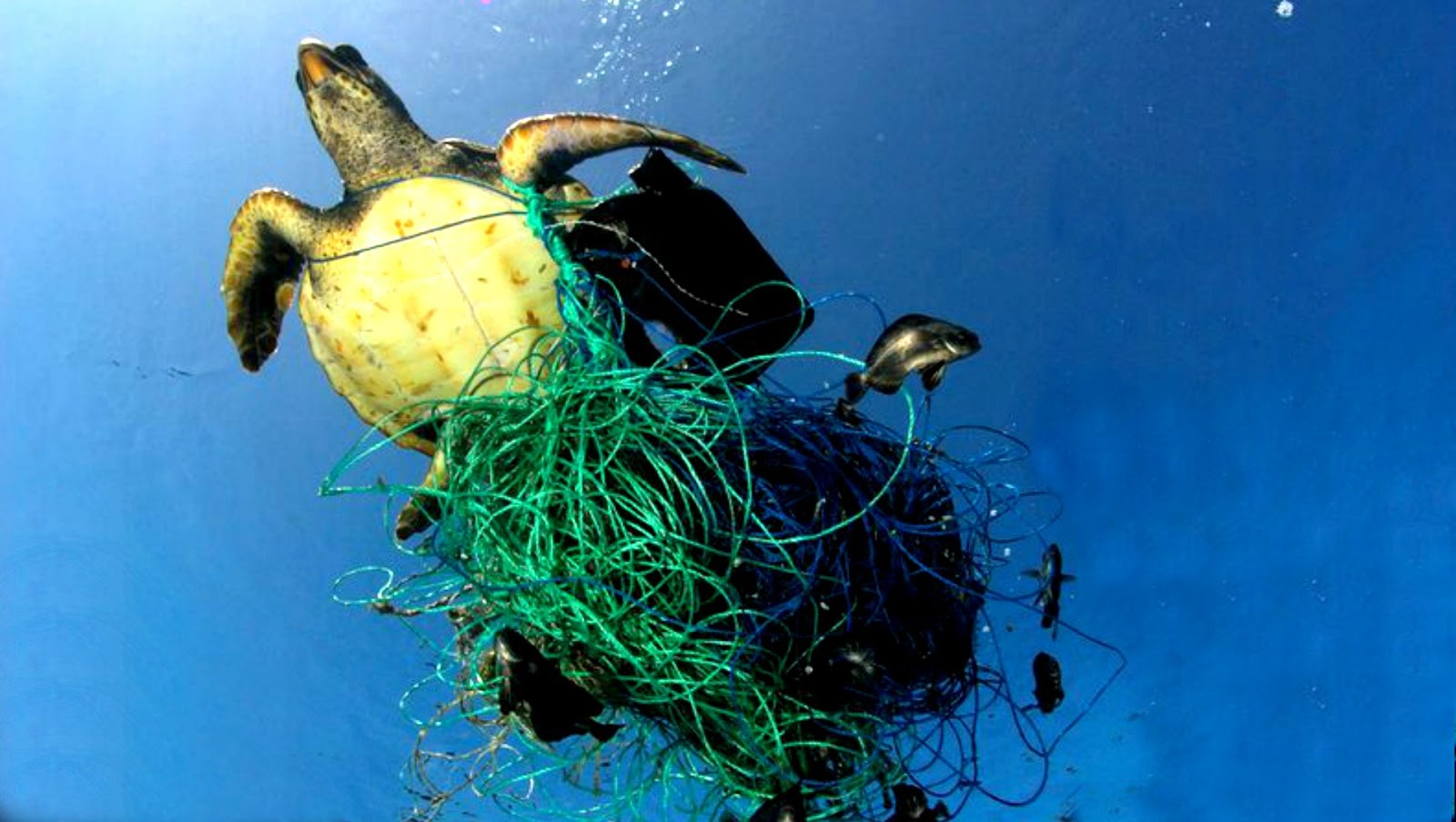
Public attention has finally been drawn to the vast amounts of plastic waste which are finding their way into the world’s seas, ruining the natural environment and harming the wildlife. The natural environment is the world God created for us, and it is our duty, and in our own interest, to look after it. Following the success of charging for plastic bags, the UK government is now planning action on plastic drinks bottles as the next step in reducing the amount of plastic used.

Where does the plastic in the seas come from? We are now learning that most of it is waste which has been thrown (or been washed) into rivers, in countries which have no proper control over their pollution or general rubbish. It has been estimated that ninety per cent of all the plastic going into the sea comes from just ten major rivers in Africa, Asia and South America. And apart from looking a mess, it is a problem because it does not break down – it does not decompose. Plastic not being part of the natural system, nature does not have microbes, bacteria or tubeworms which have evolved to eat plastic. Even the types of plastic which do end up in tiny pieces persist as “micro-plastics”. So the rubbish in the sea is there to stay.

According to ‘Abdu’l-Bahá (the son of Bahá’u’lláh): “all created things are closely related together and each is influenced by the other…” Human thinking often does not have this viewpoint, tending to categorise each issue separately, and believing that anything can be undertaken, with no consequences. However, Bahá’u’lláh specifically warned that “the civilisation, so often vaunted by the learned exponents of arts and sciences, will, if allowed to overleap the bounds of moderation, bring great evil upon men.” Even leaving aside the general detrimental effect on wildlife, it is not possible to laden the waters with continuously increasing amounts of artificial substances, without affecting the food chain on which so much of the world’s population depends.

It is humanity, collectively, which has created this situation, so it needs to be humanity, collectively, which solves it. The Universal House of Justice, the Bahá’í world body, has called for “global cooperation of the family of nations in devising and adopting measures designed to preserve the ecological balance this earth was given by its Creator.” If the “family of nations” fails in this duty, the world will need to evolve a form of world administration, which can take a more global view of problems. The possible solutions to the plastic problem definitely need tackling at a global level.

There are a variety of practical solutions – re-use, less use, recycling, etc - but the first part of the solution has to be the realisation of our own responsibility. This includes empathy for our fellow-creatures: human beings must “show forth the utmost loving-kindness to every living creature…” We have recently seen on television programmes birds mistakenly feeding items of plastic which they have “caught” at sea to their chicks. It has long been known that turtles starve to death after mistaking plastic bags for their natural food, which is jellyfish. The bags then prevent real food entering the turtles’ stomachs. As individuals we need to drastically reduce our use of plastics, particularly single-use plastics, and we can start by using wrappings, containers, and bags made from natural materials.

As most of the plastic waste in the sea comes from countries with no proper waste collection, this is clearly where much effort needs to be targeted. Waste collection provides jobs for local people, and the organisation of it helps to build up local governmental infrastructure. Having collected the waste, proper waste disposal is also essential, for materials which cannot be reused or recycled. The waste collected can (if carefully undertaken) be used as fuel for power stations, can be treated chemically, or in some places can be used as landfill for old mines and quarries. Ideally, of course, all the plastics should be recycled. But it takes time to develop the recycling facilities, and also to develop uses for the end result of the process. However, there is plenty of scope here for mankind to work on making use of what has so far been seen as useless. What is needed is the will to do it.

Another part of the solution might seem to be the increased use of plastics which have been developed so that they can decompose, because there are organisms which can tackle them. These exist already, and can be used for some purposes, but they are not really the answer to the problem in the seas. These biodegradable plastics sink rather than float, and are therefore not exposed to either the ultra-violet light or the warm temperatures which provoke their decomposition.

Finally, there needs to be some sort of marine collection process, to collect the plastic already in the water. As with all the other solutions, international or supra-national effort is clearly necessary, because so much of the sea is outside territorial waters, and therefore seen as no-one’s responsibility in particular. Some sort of vessel needs to be developed which will take the rubbish from the water, so that it can be treated and either properly disposed of, or, again, recycled.

Underlying this whole problem is a spiritual imbalance in human life. Instead of realising that we are spiritual beings, which should have a respect for other forms of life and for one another, we feel that we can treat the earth and its natural materials as expendable. In essence, we were bequeathed a world of forests, deserts, plains, mountains, water and ice. Each is home to different types of animal and plant. If mankind destroys its natural inheritance, then humanity is in trouble. Man-made plastics may have their uses, but polluting the natural world is not one of them. Bahá’u’lláh stated that, “Nature is God's Will and is its expression in and through the contingent world.” At present, that world is in need of some careful surgery.

[][][][][][][][][][][][][][][][][][][][][][][][][][][][][][][][][][][][][][][][][][][][][][]

Just before publishing this blog, my attention was drawn to a machine designed to clear up rubbish from water. This is a link to it:
https://www.facebook.com/InTheKnowInnovationAOL/videos/1850942478531740/UzpfSTE4NTA4MzM2MjUyMDkyOTI6Vks6MTg1MDk0MjQ3ODUzMTc0MA/


Monday, 2 April 2018

It’s not cricket


The world of cricket has recently been thrown into turmoil by deliberate pre-planned cheating in a match, and the individuals concerned have also had their lives turned upside down. This seems to be the end result of a culture of ad-hoc cheating on the part of a number of teams, plus a lack of respect for the players in the opposing team, to such an extent that a lot of name-calling and intimidation has been going on. This is not only by the cricketers, the spectators have been encouraged to join in too. To non-cricketing folk like me, this behaviour seems appalling! Cricket has a reputation as a “gentleman’s game”. If anyone, in any walk of life, behaves in a way which is not upright, honest and scrupulously fair, English people – and probably others - are inclined to say of their action, “It’s just not cricket!”

However, deliberate flouting of both the rules and the spirit of the game by supposed sportsmen is at one level symptomatic of people not having clear moral guidance in their lives. Religion, which usually laid down such guidelines, no longer has such a prominent place in most people’s lives. Bahá’u’lláh stated that “Religion is a radiant light”, and observed that, “Should the lamp of religion be obscured, chaos and confusion will ensue, and the lights of fairness and justice… cease to shine.”

Every religion brings guidance on personal behaviour, reminding us all how we should treat others. One of the aspects of life which Bahá’u’lláh emphasises is the need for human beings to be polite and considerate one to another: “O people of God! I exhort you to courtesy... Blessed is he who is illumined with the light of courtesy, and is adorned with the mantle of uprightness!” He also exalted the principle of honesty: “This Wronged One enjoineth on you honesty and piety... Through them man is exalted, and the door of security is unlocked…”

Inseparable from honesty is the virtue of trustworthiness, which “is the greatest portal leading unto the tranquillity and security of the people.” Those who follow all sports regard the trustworthiness of the participants as crucial. It is the absolute fairness of the competition which is an essential part of its enjoyment. If you cannot trust that what is happening is fair, then what is the value of it?

Team sports are a type of social activity, and require people to be co-operative, and therefore kind to one another. Bahá’u’lláh says on this subject, “A kindly tongue is the lodestone of the hearts of men… it is the fountain of the light of wisdom and understanding.” The Bahá’í community therefore sees the establishment of a kindly and upright character as crucially important, and to this end it organises neighbourhood children’s classes based on morality and virtues.

Sport is a microcosm of society. It involves skill, competition, comradeship, diversity, identity, bravery, exertion, heroism, self-sacrifice and so many other aspects of human life. Let cricket rescue itself from this present stage, and retake its place as a noble sport. Positive, kindly and upright behaviour is required to rescue cricket’s reputation from the ashes.

Wednesday, 7 March 2018

If trade isn’t free, it costs money


After a period of time in which countries have worked hard at setting up free trade areas, such as the North America Free Trade Agreement, the ASEAN Free Trade Area, the European Common Market and so on, we are now hearing that the USA has begun to put tariffs onto items such as washing machines, solar panels, steel and aluminium, because of what they see as unfair competition from other countries via government subsidies. Other countries are now talking about retaliatory tariffs. There are widespread fears that this could lead to a new trade war, instead of more trade deals with other countries. Trade wars destroy any existing trade deals, and often lead to a down-turn in the economy in each country involved. If an item suddenly has an extra tariff put onto it, it automatically goes up in price. That almost certainly leads to fewer sales, which can eventually lead to some companies folding and/or people losing their jobs.

Essentially, Bahá’ís believe that the world should be working towards a global Free Trade Area. Bahá’u’lláh stated that, “The earth is but one country.” This has economic implications, as well as implications for transcending racism and prejudice. Tariffs are not applied within a country. The United States of America is (are?) a good example. If something is made in Pennsylvania, they do not slap a tariff on it, in order to deliberately make it more expensive in Ohio! Everybody sees the U.S.A. as one entity, even though the Rockies are completely different from the Plains, and New York is quite unlike Los Angeles. The same applies within any country, and if the world is in principle only one country, as Bahá’u’lláh states, the same concept should apply world-wide. We do not really need armies of professional trade negotiators making – or breaking – “deals”. This is just one planet!

We need to establish some form of world administration, free from national or political bias. From then on, no country can upset the applecart, and single-handedly prevent progress, either by imposing tariffs, or by trading unfairly. In the Bahá’í writings it talks about “a world organically unified in all the essential aspects of its life, its political machinery, its spiritual aspiration, its trade and finance… and yet infinite in the diversity of the national characteristics of its federated units.”

In the meantime, large parts of the world are still relatively untouched by the global prosperity that others enjoy. The introduction of a world currency would prove a real boost to territories whose currencies are considered near-worthless. Even those in the richer countries can suffer from currency fluctuation. For example, the pound sterling has lost some of its value in recent times due to concerns over the effect on trade of the UK leaving the European Union. This change may be good for British companies who export things, but it has been bad for the countries who export to Britain, because every time the price rises, the number of British customers who can afford the new price shrinks. And that is with a currency respected in the currency markets. Poorer countries suffer currency problems on a daily basis.

Furthermore, although the good of the part is best found in the good of the whole, in the short-term things can go wrong for one particular area or another, and everyone is aware of that. An advance in technology in one factory may lead to competitors doing less well, and possibly to factory closures elsewhere. The Bahá’í system recognises that all is not necessarily well everywhere. In the Bahá’í view, the local elected bodies should be working in the interests of the local people.  Through genuine consultation with the local population, they should be considering what social and economic improvements can be made, or what new initiatives can be started up. However, this should never be at the expense of the wider interests of humanity. “Let your vision be world-embracing,” is Bahá’u’lláh’s advice. Elected representatives should regard themselves as “the representatives of all that dwell on earth.” If that happened, then worldwide free and fair trade would be seen as the obvious choice for a better world.

***********
Photo by Danny Cornelissen (http://www.portpictures.nl)

Wednesday, 7 February 2018

A death sentence – for loving humanity


Hamed bin Haydara, a Yemeni citizen aged 53 (pictured here in happier times), has recently been sentenced to death, for belonging to the wrong religion. He was arrested at work in 2013 and has since been tortured, with no medical attention allowed for his wounds. His family have not been allowed to visit him. While he has been in prison, a different faction has taken power in the capital, but the only difference it has made to his imprisonment has been the pronouncement of the death sentence, which is to be carried out in public. He was not allowed to be present at the trial, and no evidence supporting any of the charges – e.g. “insulting Islam” – was presented. The judge even complained to the prosecution about the lack of evidence, but that did not prevent him from declaring a death sentence.

Hamed Haydara is a Bahá’í, one of about two thousand Bahá’ís in the country. His belief? That there is one God, that all the world religions were divinely-inspired, and that all mankind should become one family. As Bahá’u’lláh expressed it: “The fundamental purpose animating the Faith of God and His Religion is to safeguard the interests and promote the unity of the human race, and to foster the spirit of love and fellowship amongst men.”

Mr Haydara lives in a part of the world which desperately needs unity. Yemen is fractured by tribal divisions, by sectarian rivalry and by loyalties to different political leaders. Some areas of the country are even controlled by international extremist groups who seem to be at war with the rest of humanity. And, of course, there is currently a civil war raging, caused initially by the major religious divide between the far north of the country and the rest. This is the third civil war which I remember hearing about in Yemen, and, as in the 1960s, outside powers are greatly adding to the misery for the people of the country.

And what was Mr. Haydara working quietly for? For the unity of mankind, for justice, for peace. For the recognition of the truth of all religions and for a united and thriving community. Bahá’u’lláh emphatically declared that “The well-being of mankind, its peace and security, are unattainable unless and until its unity is firmly established.” Surely, the people of Yemen would benefit from adopting these goals.

When the ordinary people of Yemen are already suffering so badly, what good is there in killing a man who is not part of the conflict and is only concerned with bringing people together?
Mr Haydara’s case has been taken up by Amnesty International. But for most of us, the only thing we can do is to pray for his release, and for the people of Yemen to overcome their differences and work together for a happier future.

Friday, 26 January 2018

Tweet others as you would wish to be tweeted

There have been a number of cases highlighted recently in which careless talk on Twitter has caused upset to others. Ill-considered and unconsidered tweets about other individuals, and even about other countries, other races and religions, often do not seem to have any basis in fact. They seem to come out of someone’s fingers without first going through their brain! This extends from those in positions of power or influence, to young children at school. It seems that people are not taught to be kind to others, and people are not even expected to be nice!

In schools now, they are increasingly trying to teach the pupils how to cope with “online bullying”. Why is this happening? Why aren’t we teaching all the pupils that they have a duty to be kind and considerate to others? Why aren’t we teaching them that it is wrong to spread false or misleading information about others? In essence, libel is often going unchallenged. In an increasingly inter-dependent society, there does not seem to be a generally-agreed moral code laid down – or even offered – stressing the need for us to be forgiving, charitable, pleasant, welcoming and constructive. Because these positive qualities are among the ones usually promoted by religions, the politicians and educationalists seem to have generally left them within the realm of religion, and they have not been given their due attention within society.

The Bahá’ís have been urging for some years that “World Citizenship” should be included on the school curriculum. This would directly include how citizens should behave towards one another. At the present, the Bahá’ís world-wide are building up community children’s classes, focussing on things such as self-respect, kindness, honesty and generosity. Speaking to adults, ‘Abdu’l-Bahá (the Son of Bahá’u’lláh) said: “Do not be satisfied until each one with whom you are concerned is to you as a member of your family. Regard each one either as a father, or as a brother, or as a sister, or as a mother, or as a child. If you can attain to this, your difficulties will vanish, you will know what to do.”

Tweeting, texting and messages on other social media are an extension of speech. Bahá’u’lláh said on this subject: “The tongue is for mentioning that which is good. Pollute it not with evil speech.” He also speaks out against unseemly language: “Defile not the tongue with cursing or execration of anyone.” Many people have been caught out recently by things they wrote in the past, unfortunately proving the truth of Bahá’u’lláh’s words when he said: “For the tongue is a smouldering fire, and excess of speech a deadly poison. Material fire consumeth the body, whereas the fire of the tongue devoureth both heart and soul. The force of the former lasteth but for a time, whilst the effects of the latter endure a century.”

One of the main goals of the Bahá’í Faith is the unity of the entire human race. Having individuals sniping at others is detrimental to the process of building up this unity. Yes, we definitely need unity at a world level – unity between states. But unity as a principle also applies at the local level: unity within a country; unity within the town; neighbourliness among the people living on the same street; unity in the classroom. Unity within any group is important, as it cements a building block together. As ‘Abdu’l-Bahá put it: “Peace must first be established among individuals, until it leadeth in the end to peace among nations.”

In the headlong rush towards free expression, society has forgotten the need to educate people on how to live in harmony. Every culture in the world has to have structures which hold it together, to make it viable and enable it to advance into the future. In the past, every religion has taught that we should treat others as we ourselves would wish to be treated. In the Hindu Scriptures it states: “This is the sum of righteousness – treat others as thou wouldst thyself be treated.” Jesus advised: “As ye would that men should do to you, do ye also unto them.” Muslims were instructed:  “None of you is a believer until he loves for his brother that which he loves for himself.” In Judaism, it appears as: “Love thy neighbour as thyself.” This teaching, found in every one of the world religions, is often known as The Golden Rule. In the Bahá’í Writings, Bahá’u’lláh encourages us to take the Golden Rule even further, when He states: “Blessed is he who preferreth his neighbour to himself.” Maybe, if we all tried to follow this teaching, people would begin to tweet about others as they would wish to be tweeted about themselves.


Tuesday, 12 December 2017

On losing my brother

Phil Vickers (1955 – 2017)

The family has recently suffered the loss of my younger brother, Philip Christopher Vickers. He was a talented individual, who wrote poetry and songs, played the guitar and was an excellent drummer. Apparently in good health as he passed sixty years of age, he was diagnosed with leukaemia just a few months later. Through the good agencies of the doctors and nurses of the National Health Service, and supported constantly by his loving wife, he survived another eighteen months in this world. I have often heard of people who have “died after a long battle with cancer”. This was it. This was what was happening. Sometimes Phil was winning – or the doctors were winning. At other times it was the disease that was winning. He was given stem cells by some kind donor, but the doctors had not been able to find a perfect match. The stem cells did their best, but eventually the poor things had to admit defeat. Phil now knew that his time was up, and he accepted his fate.

I miss him already. I have seen a lot of photos of him recently, mostly from when he was still fit and well. We have a video of him drumming at a Festival, and he looks so natural and healthy. I prefer seeing him like that, before he knew that he was to die an early death. He was a very popular person – considerate and polite. He was witty and funny in his conversation. He was very knowledgeable about several areas of life, and maintained a healthy enthusiasm for learning about new things. A lot of people came to his funeral – friends who knew the family when Phil was younger, friends from his schooldays, friends from work and fellow musicians. And they will all miss him, in one way or another.

He chose the music for his own funeral – songs that had had meaning in his life. But we also watched a video of him drumming (the one I mentioned above), and heard one of his more light-hearted poems read out. Not too many funerals get two rounds of applause during the proceedings. My wife said she sensed that Phil was “looking down” on us all.

Will I see him again? Luckily for me, I believe that the life of the soul continues after death: “To consider that after the death of the body the spirit perishes, is like imagining that a bird in a cage will be destroyed if the cage is broken, though the bird has nothing to fear from the destruction of the cage.” What form would we take in the next world? Bahá’u’lláh teaches us that life there is on another plane. In an age when physicists speculate about parallel universes, this suddenly seems quite reasonable!

But would we have a physical form? Would I see Phil at all, or just enjoy his presence? Would I see him as he was at sixty years old, or thirty years old, or as the sweet little five-year-old brother I once had? Certainly a non-physical form makes more sense. Will I recognise him? The Bahá’í Writings say yes: “A love that one may have entertained for another will not be forgotten in the world of the Kingdom…” “The… beloved ones will recognise each other, and will seek union, but a spiritual union.” They also confirm the idea that the next world does not require a body: “From the moment the soul leaves the body, and arrives in the …[next]… World, its evolution is spiritual.” Then what do we all do? According to the Bahá’í Writings, we continue to develop and progress. I find that comforting, because Phil would have always wanted to develop and progress.

It would seem a pity if such a talented and kind person simply ceased to exist. I find it much more credible to imagine Phil as floating free in another plane of existence. I have not really lost a brother, but it may be a while before we are reunited.


[][][][][][][][][][][][][][][][][][][][][][][][][][][][][][][][][][][][][][][][][][][][][][]

Photograph courtesy of Suzy Jacoby, of the bands “Firefly” and "Love Distraction".

Wednesday, 29 November 2017

Unity in diversity

His Holiness Pope Francis is currently visiting Myanmar, and is urging that every ethnic and religious group be treated with respect. His visit is being watched closely by the international news media because of the situation of the Rohingya minority. It is now estimated that over half a million of the Rohingya people have escaped over the border from Myanmar into Bangladesh. These people have found themselves on the wrong side of a cultural, ethnic, religious and political fault line. Although the language they speak is not Bengali, they share many cultural and religious affinities with the majority population of Bangladesh. Both groups are Muslim and are Indo-Aryan peoples.

Myanmar (or Burma if you prefer) has a large Buddhist majority.  Most of its peoples speak Sino-Tibetan languages and do not resemble the Rohingyas in appearance. The Arakan coast of Burma, the area now renamed Rakhine State, was ruled by Muslim leaders for centuries, which is the reason why over a million Muslims still live on the Burmese side of the modern border. The “solution” to this “problem” identified by the Burmese authorities was to pronounce these people illegal immigrants, declaring that they are in fact Bangladeshis, and that therefore they have no rights whatsoever. They have been banned from the public schools, which means that many of them are not even be able to speak the national language. They are banned from jobs such as the civil service. Over the decades, many have left, not to another homeland somewhere, but scattered throughout other countries across the world. And during this summer (not for the first time), some decided to fight back, and attacked military personnel.

Vengeance was swift. Both soldiers and local mobs have burned down the Rohingya villages and randomly killed people. Landmines, now prohibited by international law, were laid at the border, to kill or maim yet more people as they try to flee.

But there is a solution. It is unity. In fact, it is unity in diversity. Mankind is varied in skin colour, in height, in hair characteristics and eye colour, and there are thousands of different ethnic groups in the world. Each group should be valuing the others, and nurturing them, as every people contributes to the overall whole. It states in the Bahá’í Writings: "O people of the world, ye are all the fruits of one tree and the leaves of one branch.” Bahá’u’lláh said that the governments of the world should choose one language, to be taught in all the schools of the world: “The day is approaching when all the peoples of the world will have adopted one universal language and one common script. When this is achieved, to whatsoever city a man may journey, it shall be as if he were entering his own home.”

Another part of the solution is to recognise that all the major religions of the world are from the same source. Both Islám and Buddhism lay out codes of behaviour by which people should treat one another. Both these religions teach upright and civilised conduct towards other human beings, and teach forbearance. We should be looking past the differences in clothing and observances, and concentrating on this oneness of purpose in religion. Bahá’u’lláh, talking about the Divine Messengers of the past, such as the prophet Muhammad and Gautama, the Buddha, said: “If thou wilt observe with discriminating eyes, thou wilt behold Them all abiding in the same tabernacle, soaring in the same heaven, seated upon the same throne, uttering the same speech, and proclaiming the same Faith.”

All over the world there are groups of people living on the “wrong side” of a boundary line. We need to think beyond a world of borders, and think of the world as becoming one. In the words of Bahá’u’lláh, “The earth is but one country, and mankind its citizens.” If we had a world in which every people saw every other people as part of the human family, we would have unity, in diversity. I am sure that Pope Francis would readily and enthusiastically welcome this.

[][][][][][][][][][][][][][][][][][][][][][][][][][][][][][][][][][][][][][][][][][][][][][]

I wrote about the Rohingyas in an earlier blog, making some different points, and pointing out that every single people on the planet is a minority on the world scene:

http://paddyvickers.blogspot.co.uk/2015/11/we-are-in-minority.html